
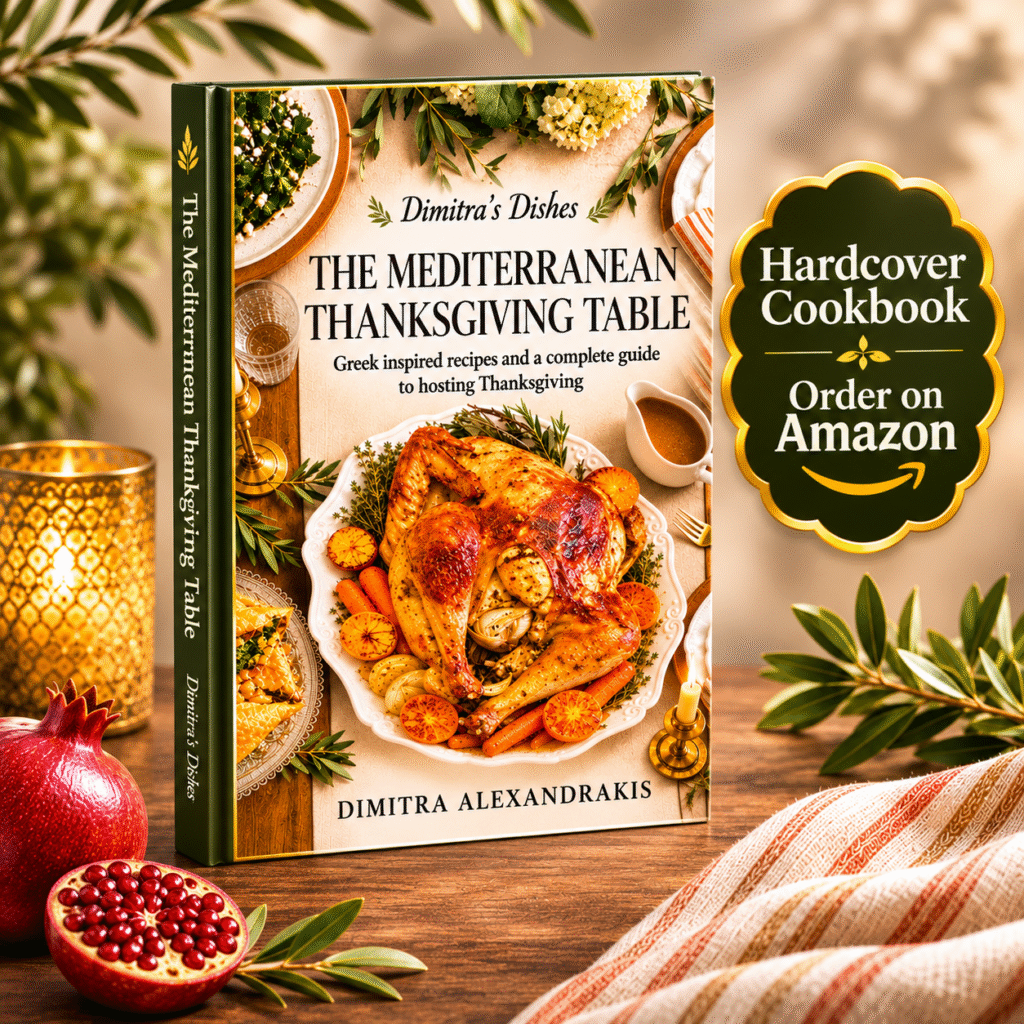
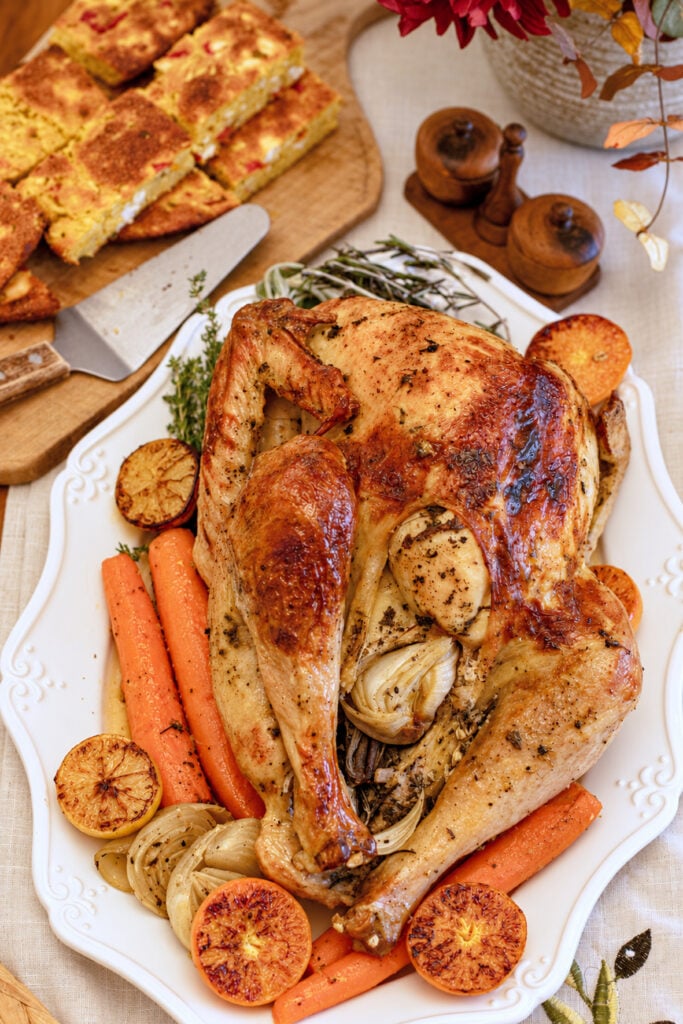
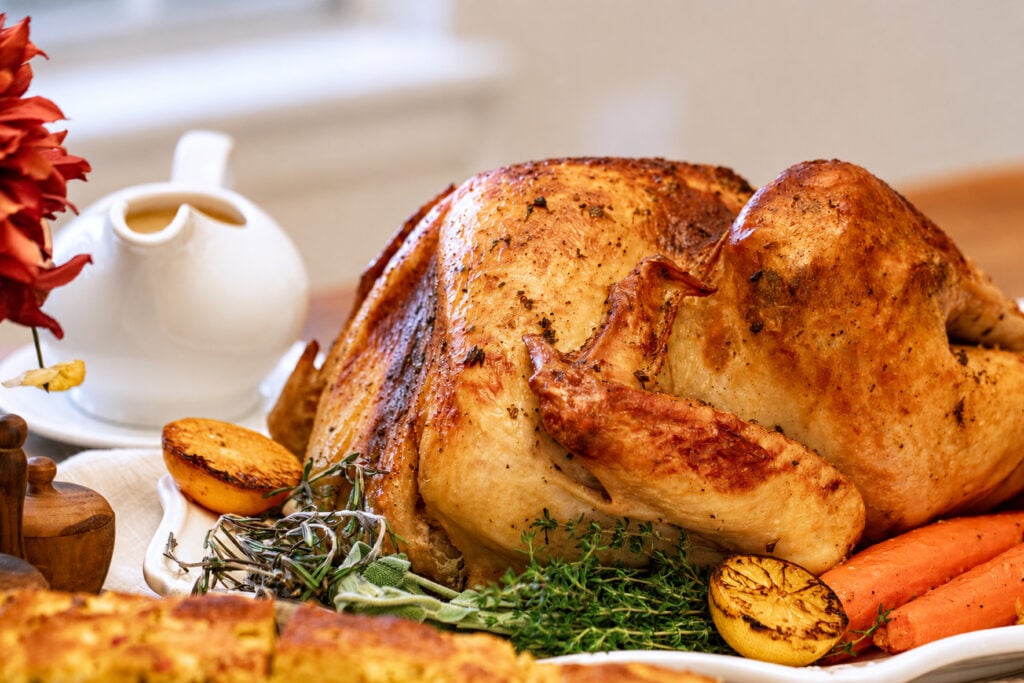
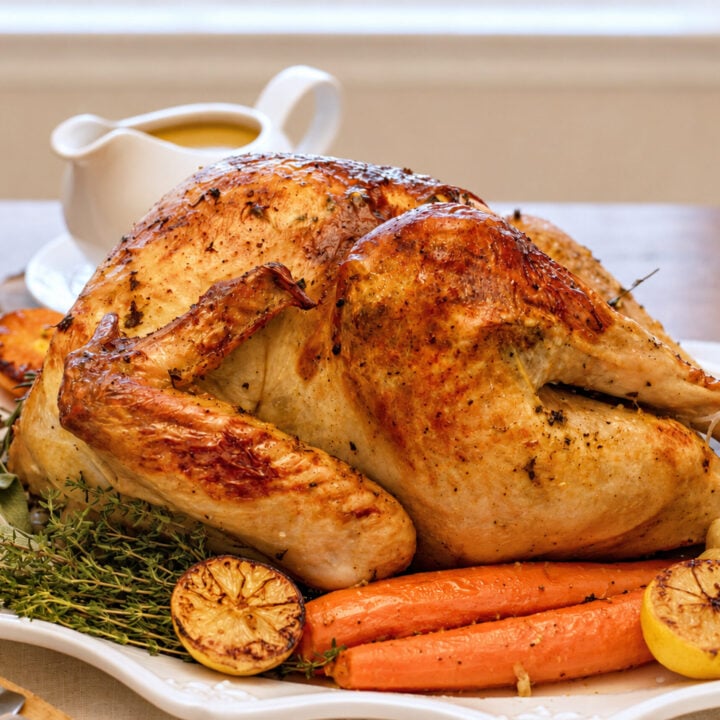
Thanksgiving is getting close, and we should probably talk about the turkey! This one comes out golden and full of flavor, with garlic, oregano, lemon, orange, and plenty of butter tucked underneath the skin.
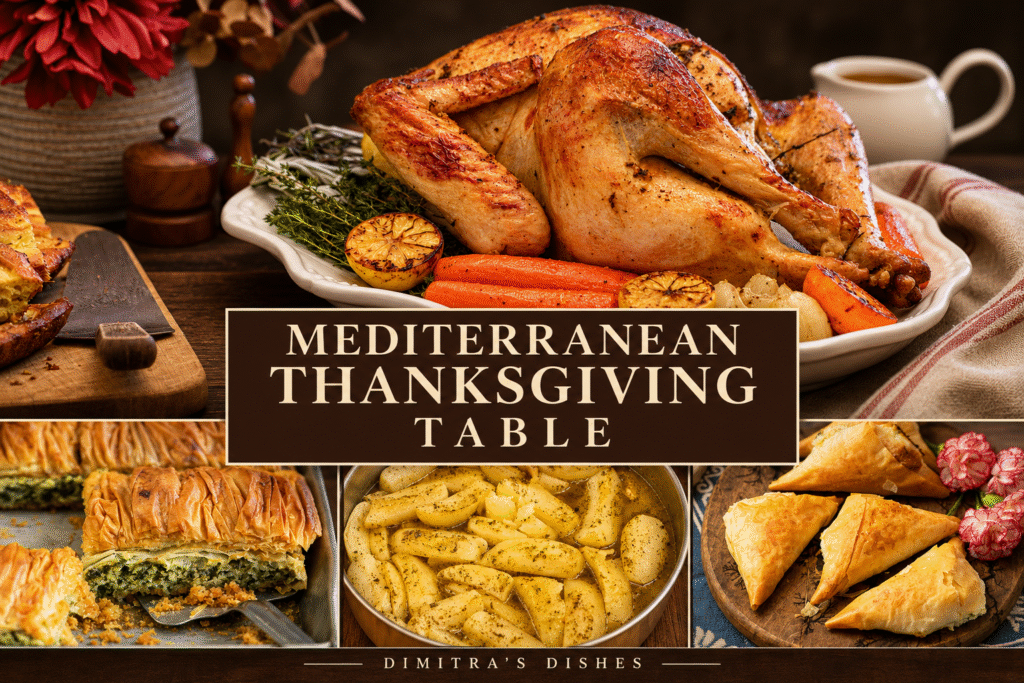
I love a Thanksgiving table with a little bit of everything. The turkey and gravy, of course, but also spanakopita, lemony potatoes, a beautiful salad, and something with feta. There’s room for all of it. We just need a little planning before every dish in the kitchen needs the oven at the same time!
So, let’s start with the turkey. If this is your first time making one, I know it can feel like a lot. It’s a big bird, everyone is coming over, and you’d really like to serve dinner before they fill up on the appetizers.
We’re going to take it one step at a time. I’ll show you where all that lovely herbed butter goes, how to tell when the turkey is ready, and how to turn the pan juices into homemade gravy. There’s also a way to carve it ahead if you’d rather have that part finished before everyone arrives.
This recipe uses a 10–12-pound turkey and serves about 8–10 people, depending on appetites and everything else you’re serving.
A little Greek flavor for the Thanksgiving turkey
Lemon, garlic, and oregano are such a beautiful combination with roast poultry, and they’re all here. The orange adds a little sweetness, the lemon zest makes the butter smell wonderful, and fresh sage and oregano or thyme go inside the turkey with more garlic.
There’s also a little cumin and crushed red pepper in the cavity seasoning. Nothing complicated. Just layers of flavor, starting inside the bird and working our way out.
Underneath, the onions, carrots, celery, and garlic cook in chicken broth and collect those delicious drippings. Please save them! That’s where the gravy begins.
Let’s get the Thanksgiving planning out of the way
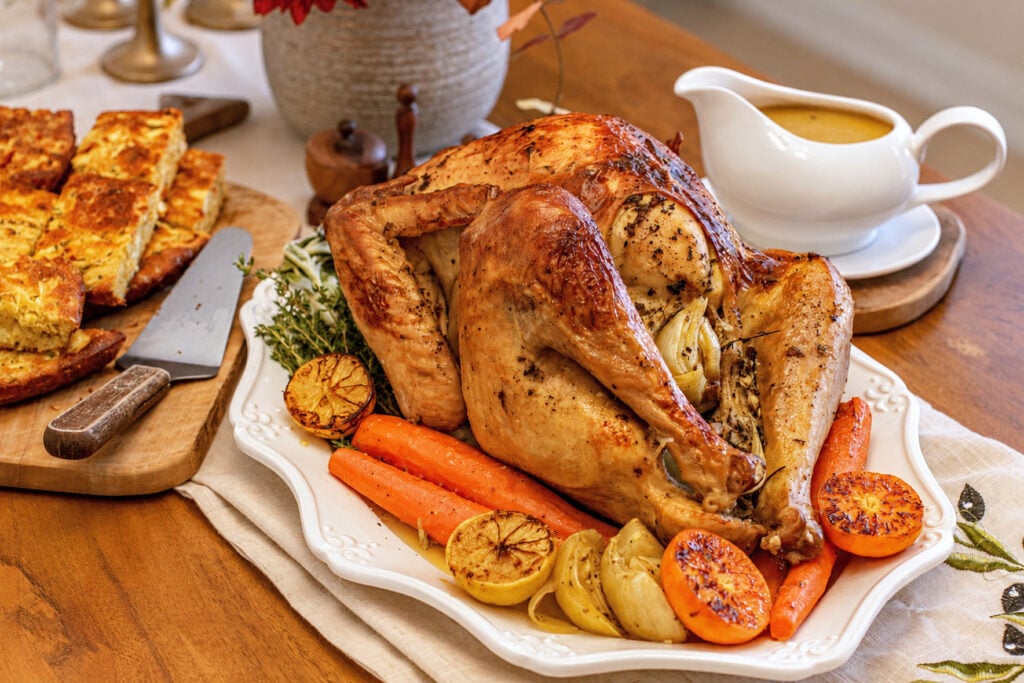
Before we get into the recipe, if you’re looking at your Thanksgiving menu and wondering how you’re going to get all of it done, I put together The Mediterranean Thanksgiving Table for exactly this part of hosting.
It has 38 recipes, complete menus, make-ahead tips, cooking schedules, and hosting worksheets. You can sit down with it, choose what you want to serve, and start figuring out what can be finished before Thanksgiving morning.
The PDF edition is an instant download, so you can start planning today. And if you love turning the pages of an actual cookbook, there’s a hardcover edition, too. Such a lovely one to keep in the kitchen or give to someone who loves feeding people.
Now, back to our turkey!
Before you start: is the turkey thawed?
This is worth checking before you do anything else. A turkey can feel thawed on the outside and still have ice inside the cavity.
Allow about 24 hours in the refrigerator for every 4–5 pounds. For this 10–12-pound turkey, plan on roughly three days, and check that it has thawed completely. Keep it on a tray to catch any drips. Once thawed in the refrigerator, it can stay there for another 1–2 days before cooking.
While you’re checking things, take out your roasting pan and make sure it fits in the oven with room for the covered turkey. Find your meat thermometer, too. It’s so much easier to do these little things now than when you have butter on your hands.
What you’ll need for the herbed butter and gravy
The full measurements are in the recipe card below, but here are a few things to keep in mind while you’re gathering everything.
The butter is salted. It gets mixed with grated garlic, dried oregano, lemon zest, lemon juice, and orange juice. Whisk it well before using it because the butter and citrus juices separate as they sit.
Some of the butter goes underneath the breast skin. Take your time making that little pocket. We want the garlic and herbs close to the meat, with the skin still intact over the top.
There are 2 tablespoons of dried oregano altogether. One goes into the butter, and the other goes over the outside of the turkey. The fresh herbs are for the cavity.
Use low-sodium broth in the roasting pan. The drippings pick up seasoning from the turkey, and you’ll have a chance to taste and adjust the gravy later.
The gravy needs 4 cups of liquid total. That’s the defatted pan juices plus enough chicken stock to reach 4 cups. Measure them together before you start pouring anything into the saucepan.
How to roast the turkey
Start with the vegetables
Preheat the oven to 325°F (160°C). Remove the neck and giblets from the turkey, then pat it dry inside and out with paper towels. Don’t rinse it.
Spread the onions, carrots, celery, and garlic in your roasting pan. Season them lightly with salt and pepper, pour in the broth, and place the turkey on top. The vegetables form the bed for the bird, so there’s no separate rack needed for this method.
Get that butter underneath the skin
Gently loosen the skin from the breast with your fingers or a spoon. Go slowly so you don’t tear it.
Season the cavity with the salt, cumin, and red pepper flakes, then add the garlic and fresh herbs. Whisk the herbed butter together and rub it all over the turkey, especially underneath the breast skin.
Finish the outside with salt, black pepper, and the extra tablespoon of dried oregano. Cross and tie the legs with butcher’s twine and tuck the wings underneath.
Cover first, then let it turn golden
Loosely tent the turkey with parchment paper, then cover the parchment with aluminum foil. Roast covered for 2½ hours.
Remove the foil and parchment and continue roasting uncovered for about 1½–2 hours, basting with the pan juices every 20 minutes. Raise the oven to 350°F (180°C) for the final 45 minutes to help the skin brown and crisp.
Here’s the part I really want you to remember: the time is a guide. Check the temperature. Start monitoring when you uncover the bird. It’s ready when the thickest part of the breast and the innermost thigh and wing reach 165°F, with the thermometer away from bone.
If yours reaches that temperature sooner, take it out. There’s no need to keep cooking it just because there’s time left on the clock.
Give it time to rest
Transfer the turkey to a cutting board and let it rest for at least 30 minutes before carving.
I know it’s tempting to cut into it right away, especially when everyone is hungry. Give it that time. We have gravy to make anyway!
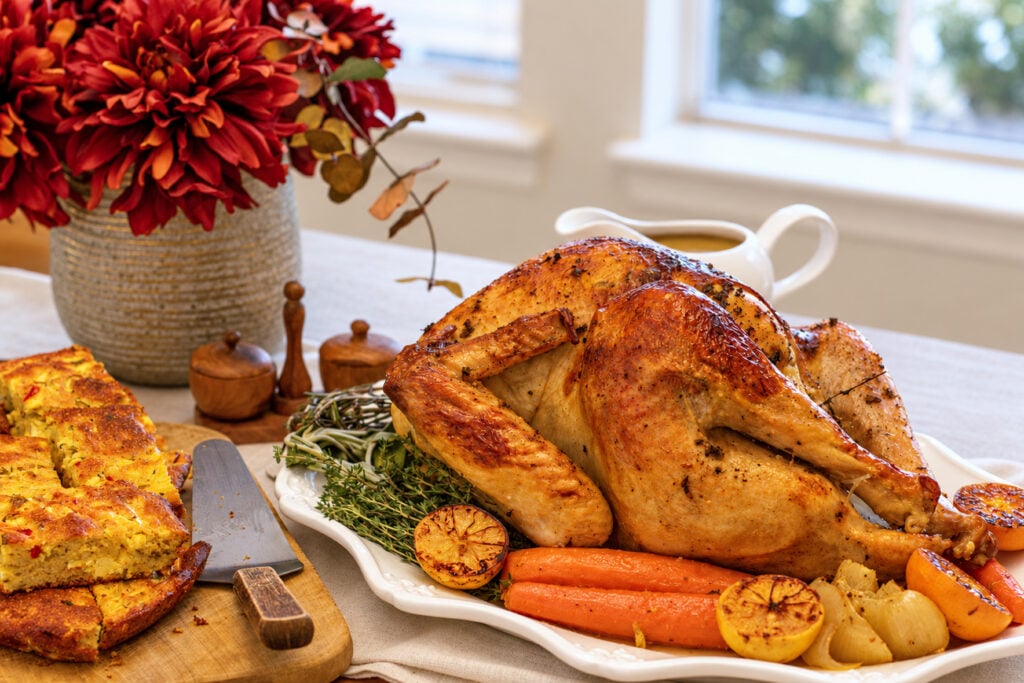
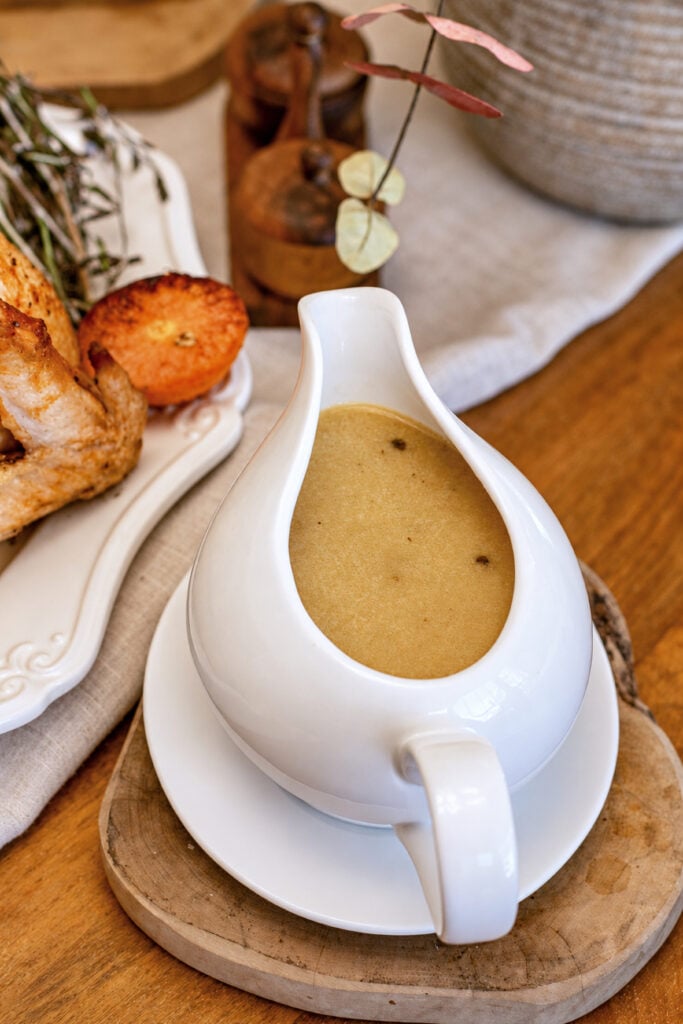
Homemade turkey gravy with a little lemon
Strain the pan juices and remove the fat. A gravy separator is helpful here. Save the roasted vegetables to serve with dinner or freeze for another use.
Add enough chicken stock to the defatted juices to make 4 cups altogether.
Melt the unsalted butter in a saucepan, whisk in the flour, and cook for 3–4 minutes. Then gradually whisk in the measured juices and stock. Pour a little at a time and keep whisking so it stays smooth.
Season with salt and pepper, bring it to a boil, then lower the heat and simmer until thickened. Stir in the fresh lemon juice at the end and taste again.
That little bit of lemon is so good with the rich gravy. Add it after thickening, as written in the recipe, so you can taste everything together before making your final seasoning adjustments.
A few little fixes, just in case
Is the turkey getting too dark? Loosely cover the browned areas with foil and keep checking the internal temperature. Golden skin is lovely, but it doesn’t tell us whether the meat is cooked through.
Is the gravy too thick? Whisk in a splash of stock at a time until you like the consistency. Taste again afterward.
Still a little thin? Let it simmer uncovered a bit longer, stirring often. Give it time to thicken before adding anything else. Dry flour sprinkled straight into gravy can leave you with lumps.
Already have lumps? Whisk well and pass the gravy through a fine-mesh strainer if needed. It’s fixable!
Too salty? A little unsalted stock will help dilute it. If it’s already thin, a separate small batch of unsalted gravy can be combined with it. This is why I like low-sodium broth and tasting the drippings before adding all the gravy salt.
The flour range in the recipe gives you some choice, too. Use ¼ cup for a lighter gravy or ⅓ cup for a thicker one, with the same 4 cups of liquid.
What can you prepare the day before?
You can peel and cut the roasting vegetables and refrigerate them in a covered container. Measure the dried seasonings, keeping the butter, cavity, and exterior seasonings separate, and gather what you’ll need for the gravy.
Then look at the rest of the menu. Which dessert can be finished? Which side can be assembled? Which salad can stay in the refrigerator until you’re ready to serve?
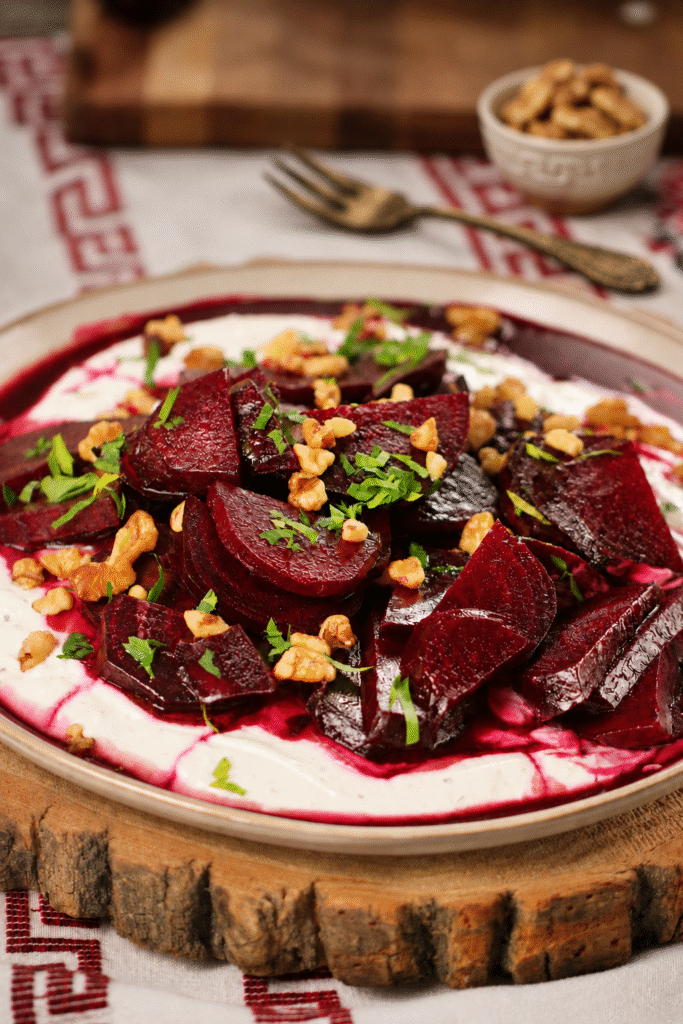
My Greek Beet and Yogurt Salad is a beautiful choice here. You can prepare the components ahead, keep them chilled, and assemble the platter before serving. I love having something fresh and colorful ready while the oven is busy.
Also, put out the serving platters and serving spoons. Such a small thing, but you’ll be glad you’re not hunting for the gravy boat with dinner nearly ready.
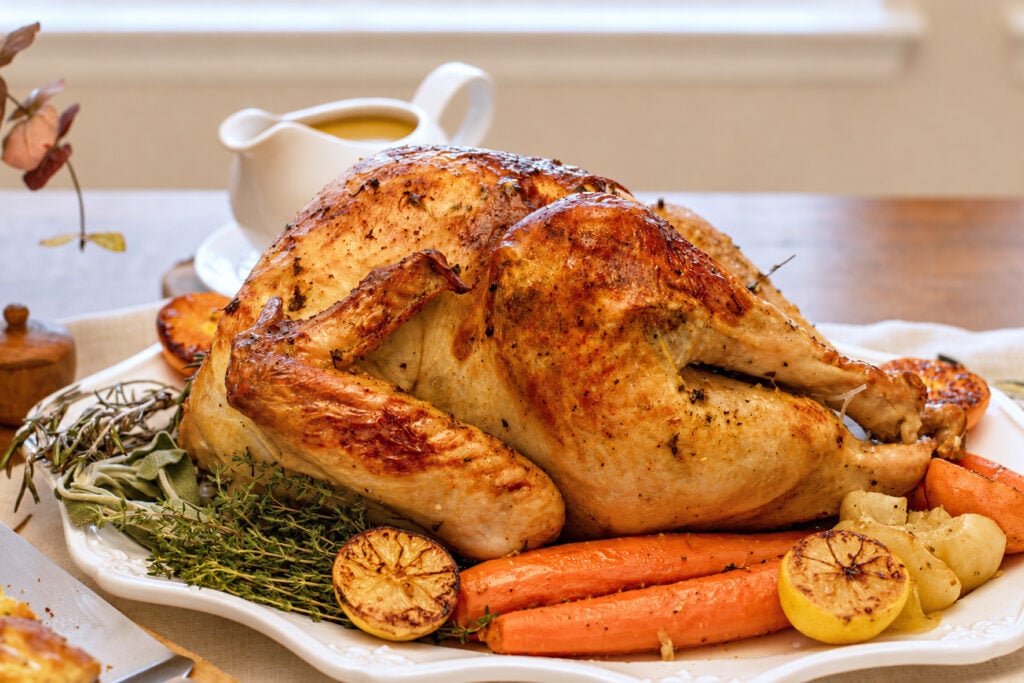
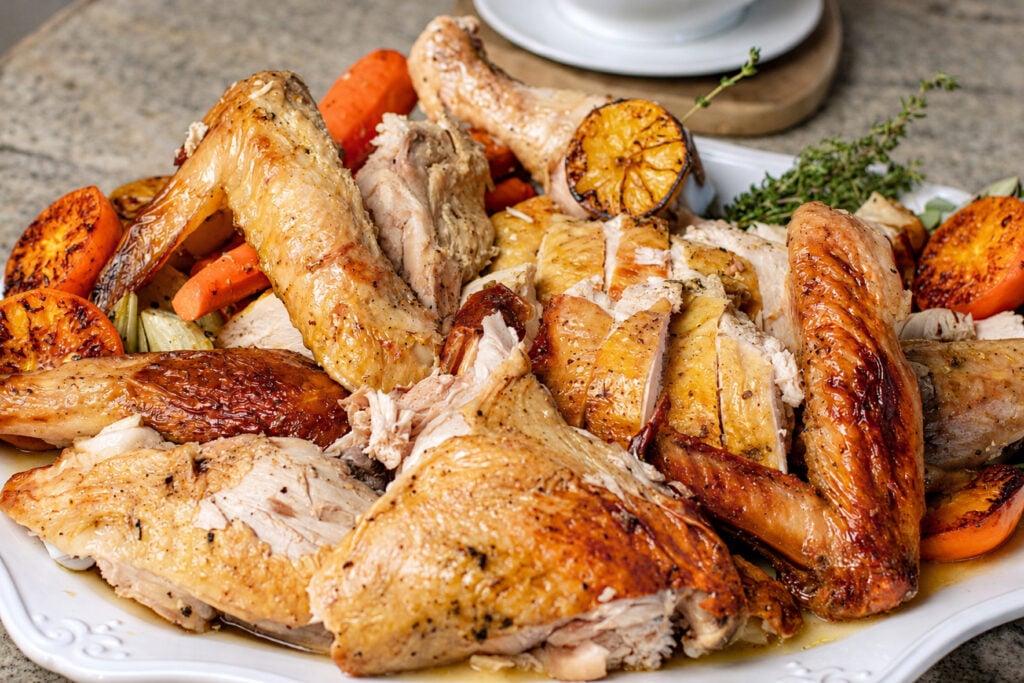
Can you carve the turkey ahead of time?
Yes! If carving in front of a kitchen full of people sounds like the last thing you want to do, you can get it finished earlier.
Let the turkey rest, then carve it and arrange the meat over a little gravy in shallow baking dishes. Cover and refrigerate promptly if serving later. Use more than one shallow dish for a large amount so it cools more quickly.
Reheat covered in a 325°F oven until the turkey reaches 165°F throughout. Bring separately stored gravy to a boil when reheating.
Remember to leave yourself oven space and time for that reheating. Having the carving finished is helpful, but we still want the turkey properly heated before it goes to the table.
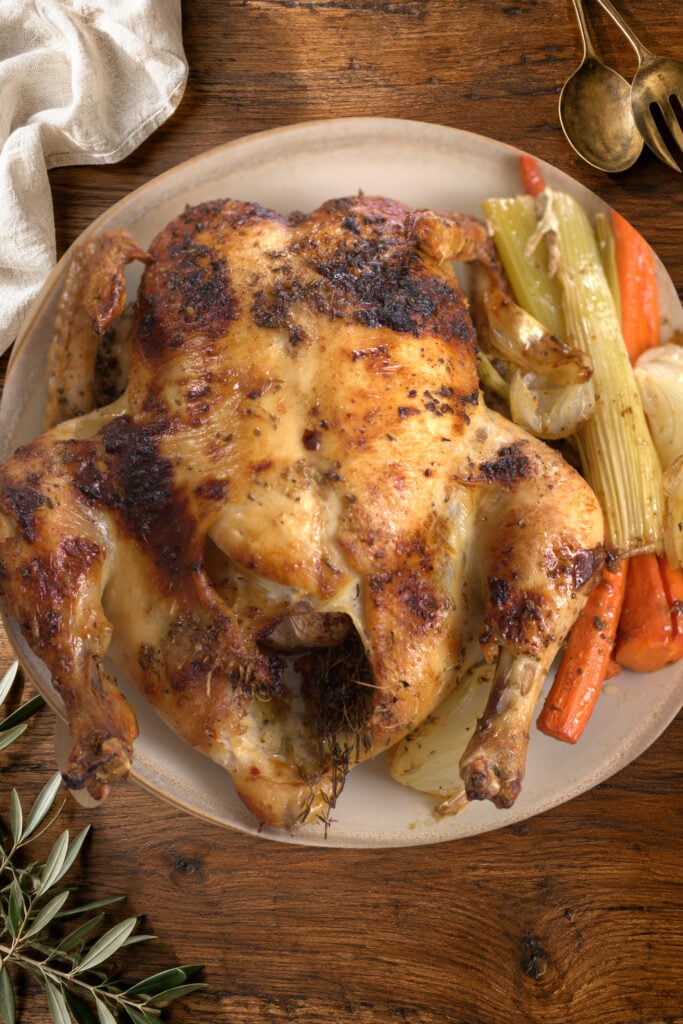
What should you serve with roast turkey?
This is where I have to remind myself that we don’t need to make every side dish we love. A potato dish, a vegetable or salad, and a flaky pastry already give you plenty to enjoy alongside the turkey and gravy.
Have a look through my Greek Holiday Side Dishes and choose a few favorites. Check the oven temperatures as you choose, and try to include something that can be served chilled. It makes such a difference in that last hour before dinner.
If you’re cooking for a smaller gathering this year, my Thanksgiving Roast Chicken with Homemade Gravy and Lemony Potatoes is another lovely option. All those comforting holiday flavors in a smaller roast.
And now we should probably talk about dessert. You knew I wasn’t going to forget that!
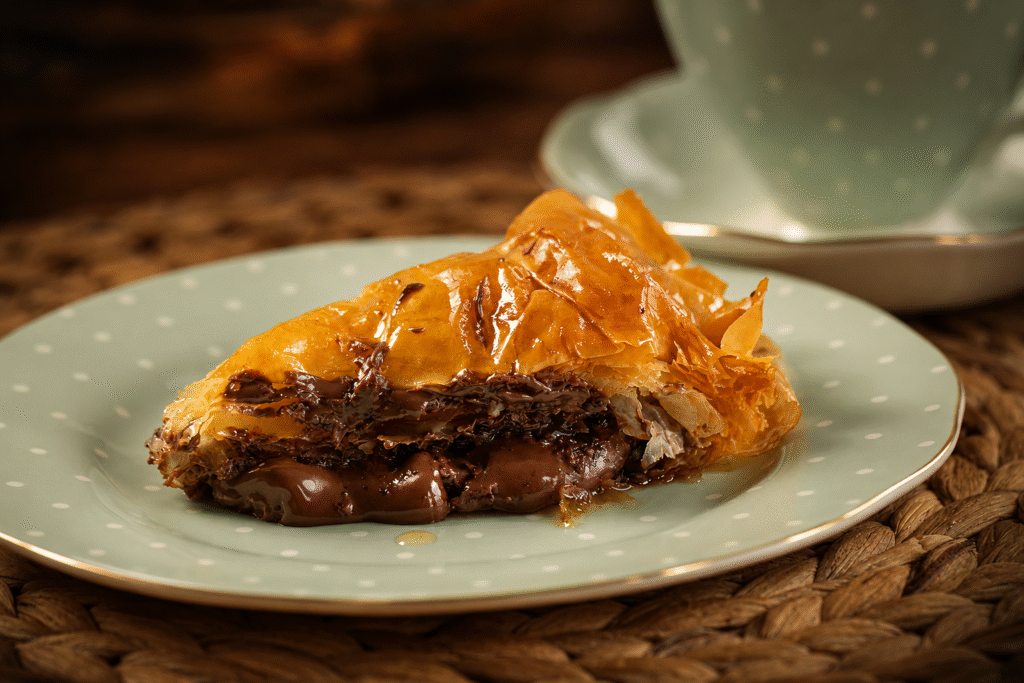
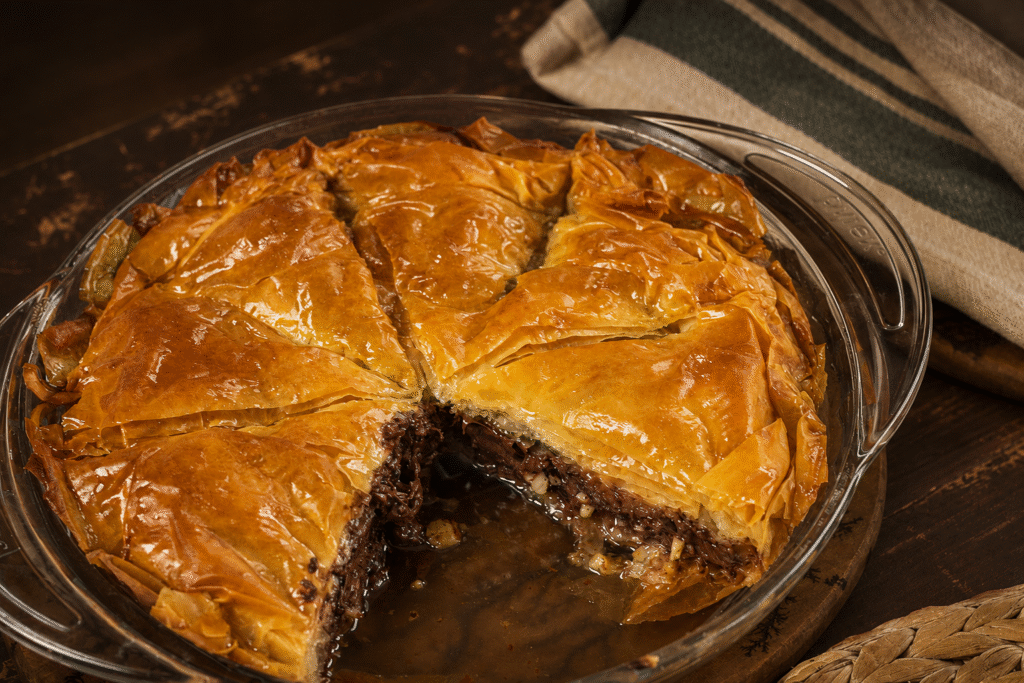
A Chocolate Hazelnut Baklava Pie would be beautiful here, with crisp phyllo and that rich chocolate hazelnut filling. If you’re planning cookie trays and holiday baking, too, my 25 Days of Desserts & a Festive Holiday Cookie Collection will give you plenty to choose from.
Choose your desserts while you’re making the dinner shopping list. Then you can get some of the baking out of the way and enjoy it, instead of remembering the sweets when the grocery stores are packed.
For help bringing the whole menu together, you can download The Mediterranean Thanksgiving Table here or order the hardcover. I’d love for it to be part of your holiday kitchen!
A few more turkey questions
How long does a 10–12-pound turkey take to roast?
This recipe allows approximately 4–4½ hours: 2½ hours covered, followed by about 1½–2 hours uncovered. The oven goes up to 350°F for the final 45 minutes. Start checking the temperature when you uncover the bird, and use 165°F in the breast, thigh, and wing to determine when it’s ready. Allow at least another 30 minutes for resting.
Do I baste it while it’s covered?
For this recipe, baste every 20 minutes during the uncovered portion. Leave it covered during the first stage of roasting.
Can I use a bigger turkey?
These quantities and roasting estimates are for a 10–12-pound bird. A substantially larger turkey needs a different cooking plan and may need more seasoning and a larger pan. Use the thermometer rather than this schedule to judge doneness.
What if there aren’t many pan juices?
That’s what the extra stock is for. Measure the defatted juices, then add enough chicken stock to reach 4 cups total for the gravy.
How do I store the leftovers?
Carve the remaining turkey and refrigerate it in shallow, covered containers within 2 hours of cooking, or within 1 hour if the temperature is above 90°F. Store the gravy separately. Keep leftovers at 40°F or below and use within 3–4 days, or freeze for longer storage. Reheat turkey to 165°F and bring gravy to a boil.
If you make this turkey, leave a rating and let me know what else you served. I’d love to hear what’s on your Thanksgiving menu this year!
Kali Orexi!
Watch the Video
Easy Roast Turkey & Gravy (Foolproof Recipe)
A juicy roast turkey with lemon, orange, garlic, and herbed butter, served with homemade gravy made from the flavorful pan juices. A beautiful centerpiece for your Thanksgiving table!
Ingredients
- 1 (10–12-pound) turkey, patted dry
- 2 onions, peeled and quartered
- 3 carrots, peeled and washed
- 3 celery ribs, washed and dried
- 6–8 garlic cloves
- Salt and freshly ground black pepper
- 1 tablespoon dried crushed oregano, for seasoning the exterior
- 2 cups low-sodium chicken broth
Herbed Butter:
- 6 ounces salted butter, melted
- 1 teaspoon salt
- Freshly ground black pepper
- 3 garlic cloves, grated
- 1 tablespoon dried crushed oregano
- Zest of 1 lemon
- Juice of 1 lemon
- Juice of 1 orange
Turkey Cavity:
- 1 teaspoon salt
- 1 teaspoon cumin powder
- ½ teaspoon crushed red pepper flakes
- 1 head garlic or 12 garlic cloves
- Small bunch fresh oregano or thyme
- Small bunch fresh sage
Gravy:
- 4 tablespoons unsalted butter
- ¼–⅓ cup all-purpose flour
- 1 teaspoon salt, or to taste
- Freshly ground black pepper, to taste
- 2–3 tablespoons fresh lemon juice
- Pan juices
- 2–3 cups chicken stock, or enough to equal 4 cups liquid including the pan juices
Instructions
Prepare the Turkey:
Preheat the oven to 325°F (160°C).
Remove the neck and giblets from the turkey cavity. Pat the turkey dry inside and out with paper towels. Do not rinse the turkey.
Use your fingers or a spoon to carefully separate the skin from the breast, creating a pocket for the herbed butter.
Place the onions, carrots, celery, and 6–8 garlic cloves in the bottom of a large roasting pan. Season lightly with salt and pepper, then pour the chicken broth over the vegetables.
Place the turkey on top of the vegetables.
Season the Turkey:
Season the cavity with the salt, cumin, and crushed red pepper flakes. Fill it with the garlic, fresh oregano or thyme, and sage.
Combine all of the herbed butter ingredients in a bowl and whisk well.
Rub the herbed butter all over the turkey, especially underneath the breast skin. Season the exterior generously with salt, some black pepper, and the tablespoon of dried crushed oregano listed for the exterior.
Cross the legs and tie them together with butcher’s twine. Tuck the wings underneath the turkey.
Roast the Turkey:
Loosely tent the turkey with parchment paper, then cover the parchment with aluminum foil. Roast covered for 2½ hours.
Remove the foil and parchment. Continue roasting uncovered for another 1½–2 hours, or until the turkey reaches an internal temperature of 165°F. Check the thickest part of the breast and the innermost thigh and wing, keeping the thermometer away from the bone.
During the uncovered portion of roasting, baste with the pan juices every 20 minutes.
Raise the oven temperature to 350°F (180°C) for the final 45 minutes of roasting to help the skin become golden and crisp. Use the internal temperature to determine when the turkey is ready.
Transfer the turkey to a cutting board and let it rest for at least 30 minutes before carving.
Make the Gravy:
Pour the pan juices through a strainer. Reserve the roasted vegetables to serve alongside the turkey or freeze for another use.
Pour the strained juices into a gravy separator and remove the fat. Alternatively, place them in a bowl in the refrigerator or freezer until the fat rises to the surface and can be removed.
Combine the defatted pan juices with enough chicken stock to make 4 cups of liquid.
Melt the butter in a large saucepan over medium heat. Add the flour, whisking constantly, and cook for 3–4 minutes.
Gradually whisk in the combined pan juices and stock until smooth. Season with salt and pepper and bring to a boil.
Reduce the heat to medium-low and simmer until thickened.
Stir in the lemon juice, then taste and adjust the salt and pepper.
Transfer to a gravy boat and serve alongside the carved turkey.
Notes
Roasting times are a guide. Use a meat thermometer to check for an internal temperature of 165°F.
Baste every 20 minutes during the uncovered portion of roasting.
Let the turkey rest for at least 30 minutes before carving to help retain its juices.
The recipe uses 2 tablespoons of dried oregano altogether: 1 tablespoon in the herbed butter and 1 tablespoon for the exterior.
For the gravy, the pan juices and added chicken stock should measure 4 cups altogether. Add the lemon juice after the gravy has thickened.
The roasted vegetables can be served alongside the turkey or frozen for another use.
Recommended Products
As an Amazon Associate and member of other affiliate programs, I earn from qualifying purchases.



Leave a Reply