
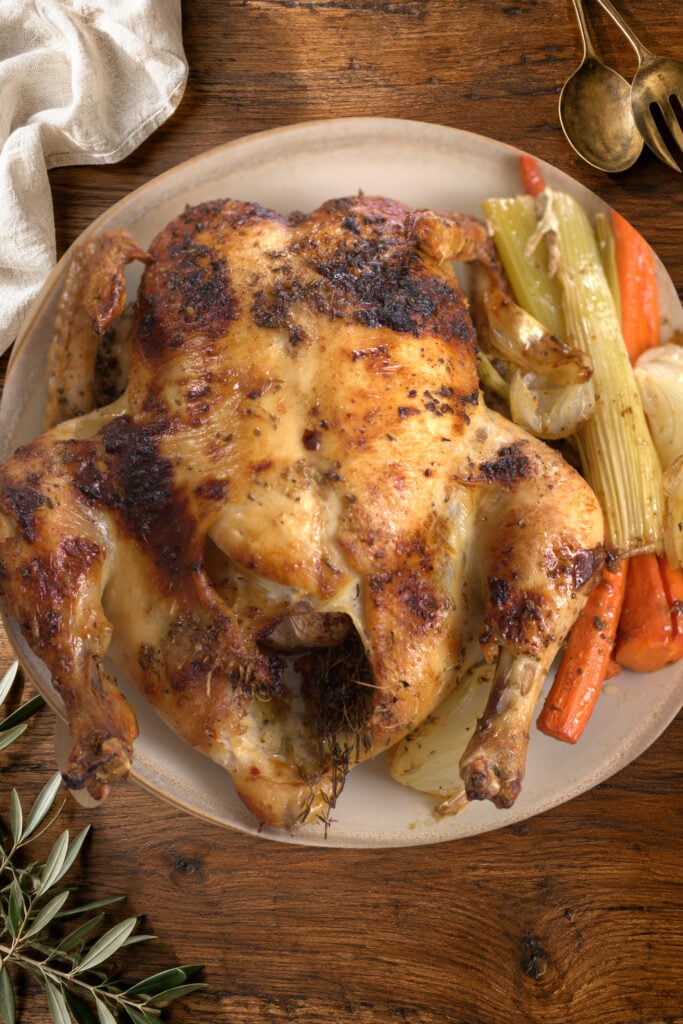
Golden skin, juicy chicken, silky homemade gravy, and a pan of brothy Greek lemon potatoes. This Thanksgiving roast chicken brings all those cozy holiday flavors to the table, whether you’re hosting a smaller dinner or need a little extra chicken alongside the turkey.
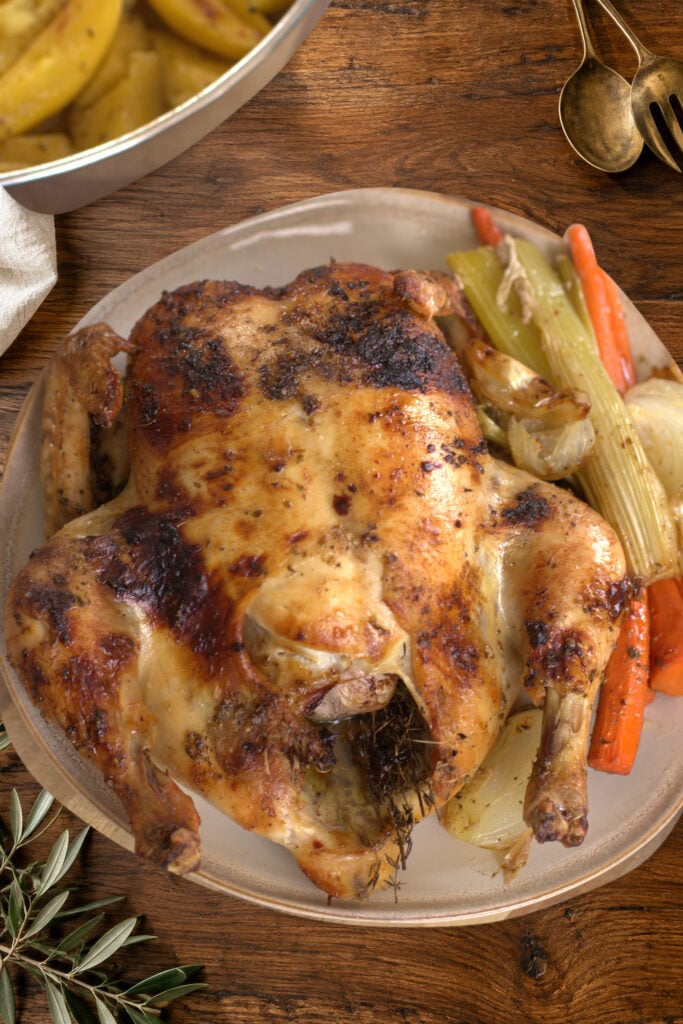
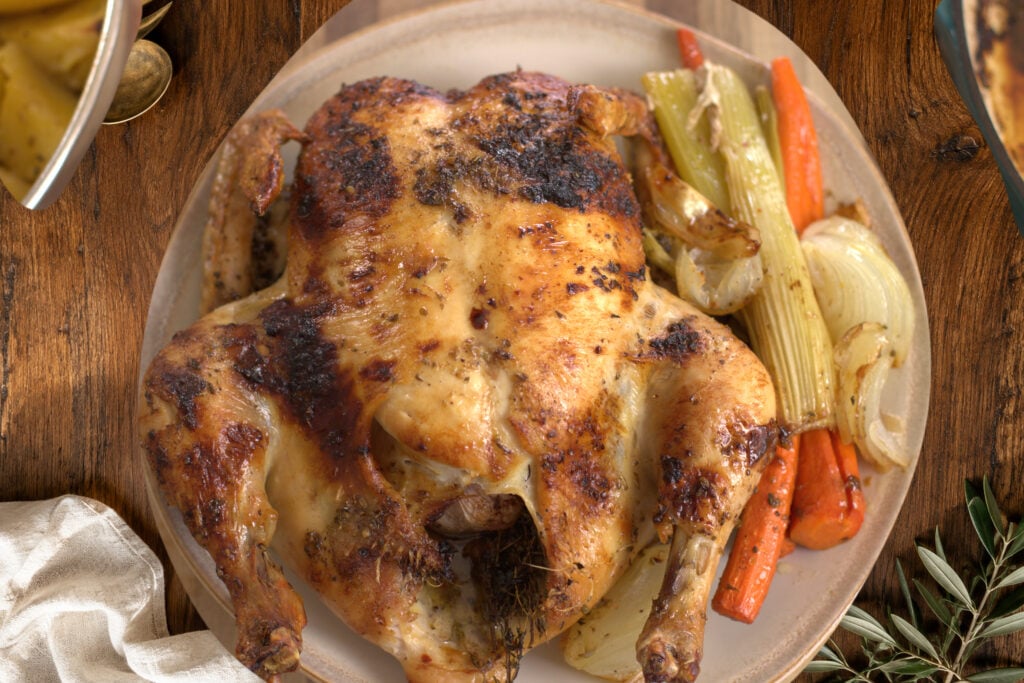
The chicken roasts with rosemary, thyme, oregano, garlic, lemon, and orange, while the vegetables underneath collect those delicious drippings. Then, while the chicken rests, we turn the pan juices into gravy. The potatoes roast in their own dish at the same oven temperature, so everything feels like one beautiful holiday meal.
I make this chicken throughout the year, but it’s especially helpful on Thanksgiving. For a big gathering, roast one turkey and prepare two or more of these chickens. You’ll have extra white and dark meat, more drippings for gravy, and one very inviting platter.
Why you’ll love this Thanksgiving roast chicken
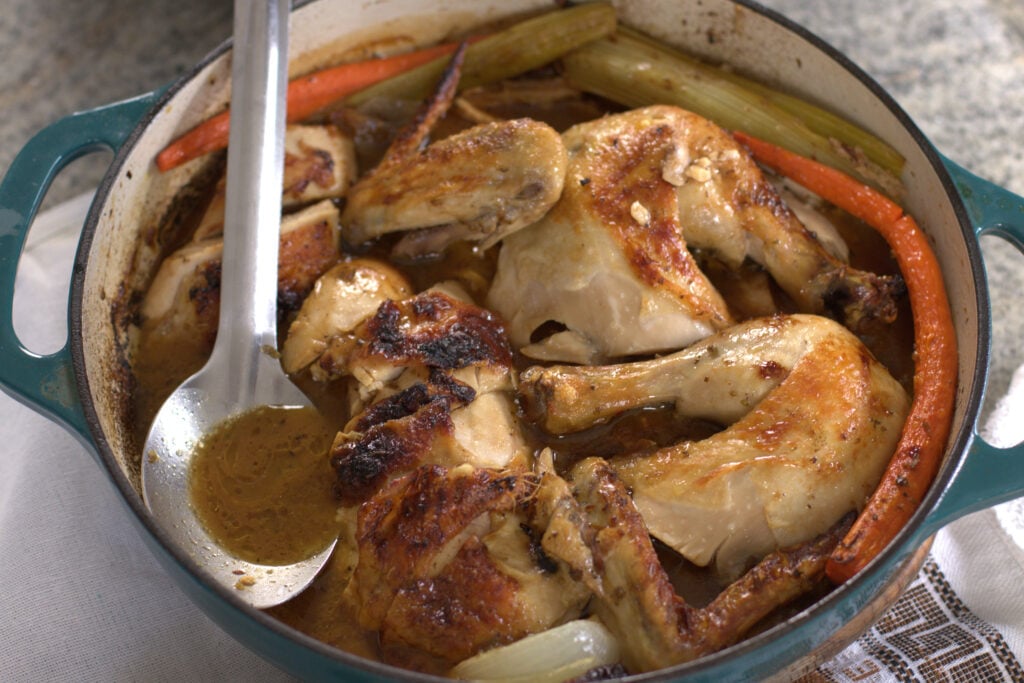
There’s a lot of flavor here without a long list of complicated steps. Butter goes underneath the breast skin and over the outside, the citrus adds brightness, and the fresh herbs give the chicken that lovely holiday aroma.
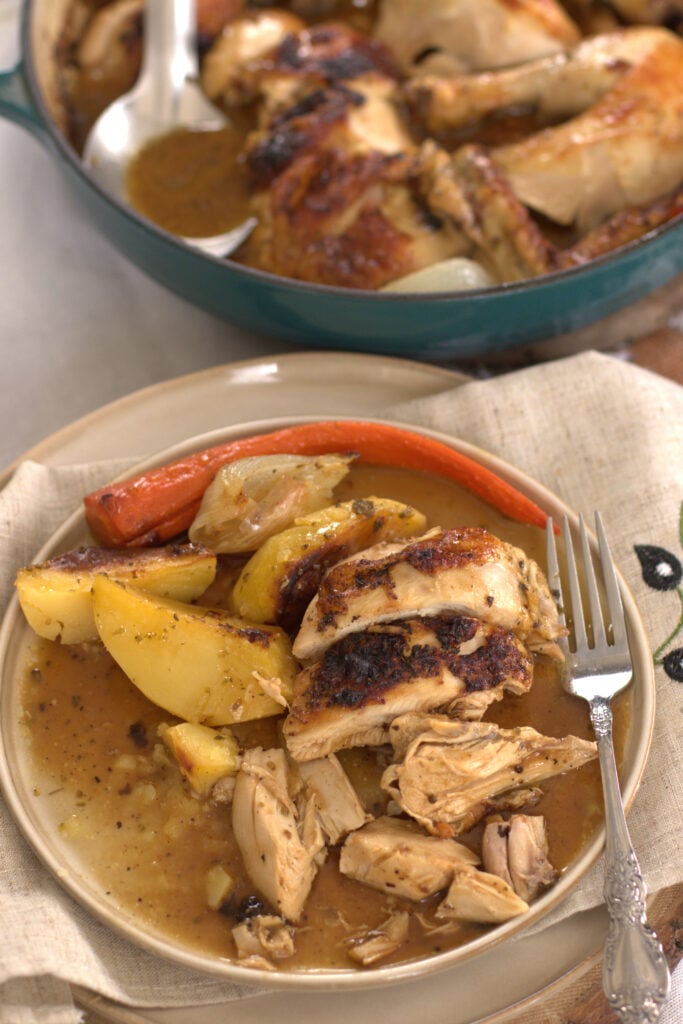
The gravy starts with the chicken’s own drippings, so you don’t need a separate gravy recipe. And those lemon potatoes? They cook in chicken broth until tender and saucy. You’ll want a little of that broth spooned onto your plate.
You can also season the chicken the day before, which is always welcome when there’s a holiday meal to organize.
Planning the rest of your Thanksgiving menu?

Choosing the main dish is a wonderful start. Then come the sides, appetizers, dessert, and the question of what can be made ahead.
That’s why I created The Mediterranean Thanksgiving Table. Inside, you’ll find 38 recipes, complete holiday menus, make-ahead tips, cooking schedules, and printable hosting worksheets to help you put the whole meal together.
If you love a table filled with Thanksgiving favorites and Greek dishes, this book will help you choose what to serve and plan when to make it. There’s room for flaky spanakopita, lemony potatoes, something sweet, and a little breathing room for the cook.
Get The Mediterranean Thanksgiving Table digital cookbook and hosting guide here. The PDF is available as an instant download, so you can start planning right away.
What ingredients do I need?
A whole chicken: Use a 4–5-pound chicken for this recipe’s approximate roasting time. Remove any giblets from the cavity before seasoning.
Carrots, onion, celery, and garlic: These go beneath the roasting rack to flavor the pan drippings. Half of the garlic head goes in the pan, and the other half goes inside the chicken.
Butter: Melted unsalted butter goes under the breast skin and over the chicken. Loosen the skin gently so it stays intact.
Lemon and orange: Use the juice of both. The squeezed halves can go inside the cavity if they fit comfortably.
Rosemary, thyme, and oregano: Fresh rosemary and thyme go inside the cavity with the garlic. Dried oregano seasons the chicken.
Pan fat, flour, and pan juices: These form the homemade gravy. Chicken broth lets you adjust its consistency, and a little fresh lemon juice brightens it at the end.
Russet potatoes: Peel them and cut them into thick, evenly sized wedges. They roast separately with olive oil, lemon, garlic, oregano, and chicken broth. Cumin and crushed red pepper flakes are optional.
The complete quantities are in the recipe card below.
What equipment will I need?
Have a roasting pan or oven-safe skillet, a roasting rack that fits inside it, a 9-by-13-inch baking dish for the potatoes, kitchen twine, and an instant-read thermometer ready.
For the gravy, you’ll need a fine-mesh strainer, a heat-safe measuring cup or pitcher, a saucepan, and a whisk.
Check that both baking dishes fit in your oven before you begin. Keep the chicken in the lower third of the oven, with enough room around the dishes for heat to circulate.
How to make Thanksgiving roast chicken
Prepare the chicken and roasting pan
Preheat the oven to 425°F and position a rack in the lower third.
Scatter the carrots, onion, celery, and half the garlic head in the roasting pan. Set the roasting rack over the vegetables.
Remove the giblets and pat the chicken very dry, including inside the cavity. This is an important step for nicely browned skin.
Season inside, underneath the skin, and outside
Use some of the salt, pepper, and oregano inside the cavity. Add the remaining garlic half, rosemary, thyme, and remaining oregano.
Squeeze the lemon and orange juice over the chicken and into the cavity. Add the squeezed citrus halves only if they fit comfortably. Don’t pack the cavity tightly.
Gently loosen the skin over the breasts. Spoon some melted butter underneath and spread it over the breast meat. Brush the rest over the outside, then season with the remaining salt and pepper.
Set the chicken breast-side up on the rack. Tie the legs together and tuck the wing tips underneath.
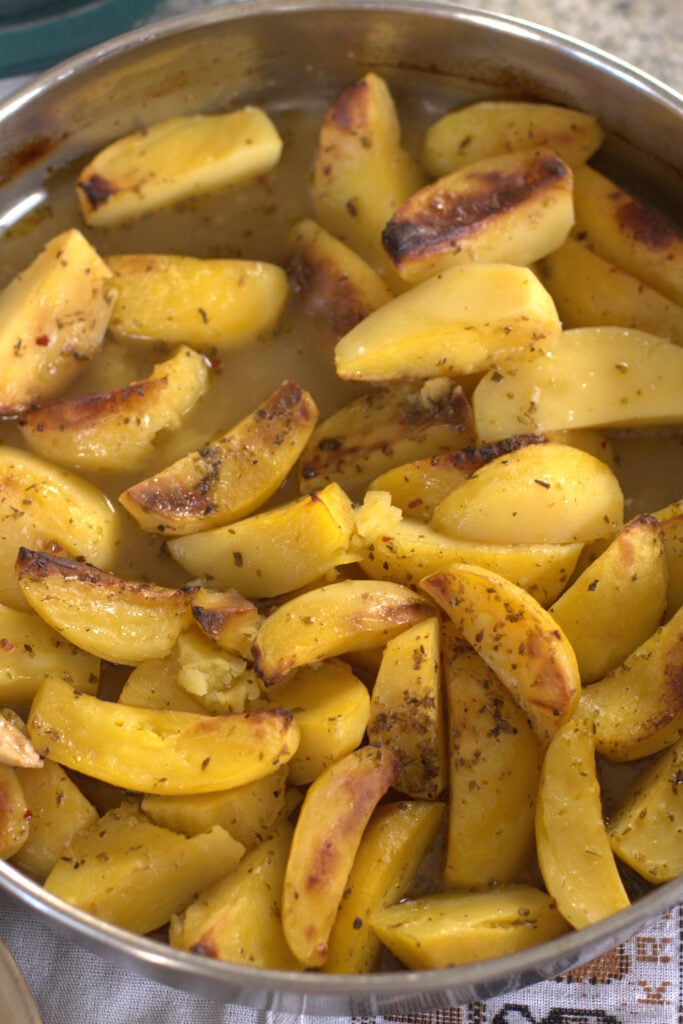
Prepare the brothy lemon potatoes
Put the potato wedges in a 9-by-13-inch baking dish. Toss with the olive oil, lemon juice, salt, pepper, garlic, oregano, and optional spices, then pour in the chicken broth.
These are the saucy version of my Greek lemony roasted potatoes. Expect tender wedges surrounded by lemony broth.
Roast and check for doneness
Roast the chicken and potatoes uncovered for approximately 1 hour and 30 minutes.
Baste the chicken once or twice. If the breast skin gets dark before the meat is cooked, loosely tent it with foil. If the roasting pan dries out or the drippings begin to burn, add ½ cup chicken broth to the bottom of the pan.
Gently turn the potatoes once. They’re ready when a fork slides easily into the wedges. The potatoes and chicken may finish at different times, so check each separately.
For the chicken, use a thermometer rather than relying on the clock or skin color. Check the thickest part of the breast and the innermost thigh and wing areas, avoiding bone. All should reach at least 165°F before the chicken comes out of the oven.
Rest before carving
Transfer the chicken to a platter, loosely tent with foil, and let it rest for 15–20 minutes.
Leave the drippings in the pan. This is the perfect time to make the gravy.
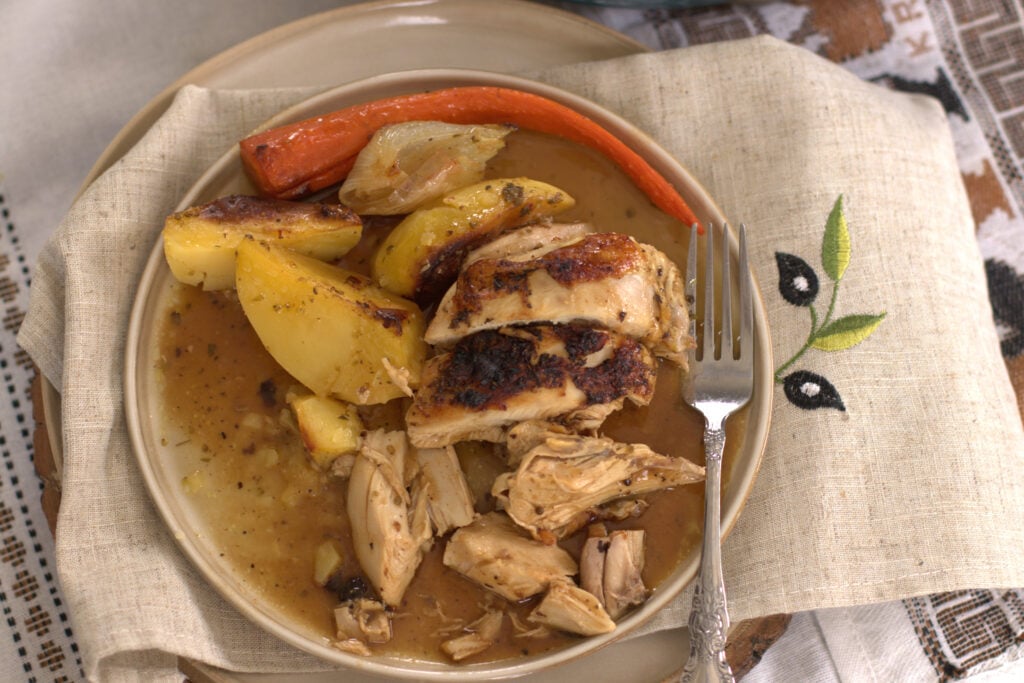
How do I make gravy from chicken drippings?
Strain the pan liquid into a heat-safe measuring cup and let it stand briefly. The fat will rise to the top.
Measure 3–4 tablespoons of that fat into a saucepan. Separately reserve 1 cup of the strained pan juices beneath the fat. Keeping those measurements separate helps you avoid a greasy gravy.
Whisk the flour into the fat over medium heat for 1–2 minutes, until smooth and lightly golden. Slowly whisk in the reserved pan juices, then cook until thickened.
Add chicken broth gradually until the gravy is the consistency you like. Taste before adding salt, especially if your broth is already salted. Finish with lemon juice and black pepper as needed.
How do I fix gravy that’s too thick, thin, or lumpy?
Too thick: Whisk in a little chicken broth at a time.
Too thin: Simmer for a few more minutes, stirring, before adding any more broth.
Lumpy: Whisk thoroughly. If lumps remain, pour the gravy through a fine-mesh strainer.
Greasy: Make sure you measure the fat separately from the juices. Don’t pour all the unseparated drippings into the saucepan.
Too salty: Stop adding salt and use unsalted broth to loosen the gravy. This may help, although heavily salted drippings can be difficult to correct completely.
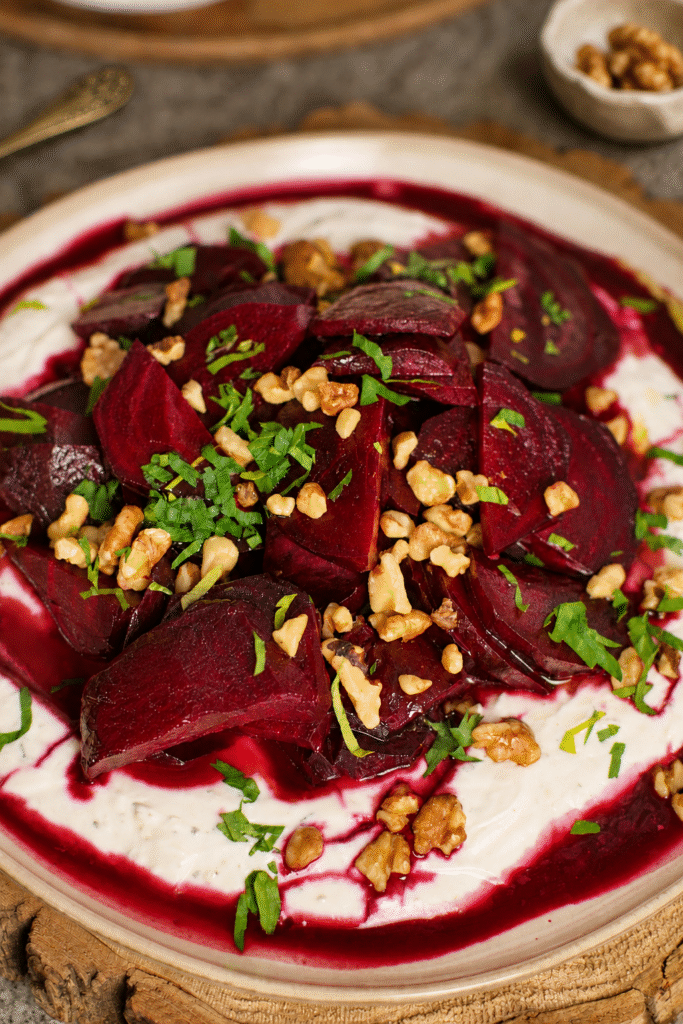
What should I serve with it?
With the chicken, gravy, and potatoes, you already have a generous main course and side dish. Add something cool and colorful, such as my Greek Beet and Yogurt Salad, to balance the warm roast.
For a smaller gathering, keep the rest of the menu simple. For a larger Thanksgiving table, serve this chicken alongside your turkey.
If you’d love the whole menu planned together, The Mediterranean Thanksgiving Table includes the recipes and planning pages to help you choose your dishes, organize your shopping, and spread the cooking out.
Can I prepare it ahead?
You can season the chicken, cover it, and refrigerate it up to 24 hours ahead. Take it out 30–45 minutes before roasting while you organize the oven and potatoes; keep the rest of the preparation time brief.
If oven space is limited, make the potatoes earlier. Refrigerate them promptly if you won’t serve them within two hours, then reheat covered with a splash of broth until they reach 165°F.
Make the gravy while the freshly roasted chicken rests. That way, you can serve it with all those flavorful drippings.
How do I store and reheat leftovers?
Remove leftover chicken from the bones and divide it, the potatoes, and the gravy into shallow containers. Refrigerate within 2 hours, or within 1 hour if the temperature is above 90°F. Keep the refrigerator at 40°F or below and use refrigerated leftovers within 3–4 days.
Reheat chicken covered with a splash of broth until it reaches 165°F. Reheat the potatoes covered, adding broth as needed, to the same temperature. Bring leftover gravy to a boil while stirring, adding a little broth if it has thickened.
Cooked chicken can also be frozen; use it within about 4 months for best quality.
Frequently asked questions
Can I serve chicken instead of turkey for Thanksgiving?
Absolutely! This is a lovely centerpiece for a smaller gathering, especially if your family prefers chicken. You still get a golden roast, homemade gravy, and all your favorite holiday sides.
How many people does one chicken serve?
The recipe makes one 4–5-pound chicken with gravy and a generous dish of potatoes. As a planning estimate, allow roughly 4–6 portions of chicken, depending on appetites and the rest of your menu. If chicken is your only main dish and you want generous servings or leftovers, plan toward the lower end.
Can I roast two chickens?
Yes. Multiply the chicken ingredients for each bird and allow enough pan and oven space. Avoid crowding, check each chicken separately with a thermometer, and allow flexibility in the cooking time. Measure the fat and juices for each batch of gravy rather than using all the drippings at once.
Should I roast it covered or uncovered?
Start uncovered. Use a loose foil tent over the breast only if the skin becomes too dark before the chicken is done.
How do I keep the breast meat juicy?
Use the butter underneath the breast skin, check the temperature, and avoid continuing to roast after the chicken is fully cooked. Let it rest for 15–20 minutes before carving.
Do I have to baste?
This recipe calls for basting once or twice. Have your spoon or baster ready so you can work quickly and close the oven again.
Can I use a frozen chicken?
Thaw it fully before following this recipe. Thaw in the refrigerator rather than on the counter. The approximate roasting time here is for a thawed 4–5-pound bird.
Can I put bread stuffing inside?
The cavity in this recipe holds garlic, herbs, and optional squeezed citrus halves. Bake bread stuffing separately; packing it inside would change the cooking requirements.
What if the chicken is browned but the temperature is too low?
Loosely tent the breast with foil and continue roasting until all the checked areas reach at least 165°F. Brown skin alone doesn’t tell you that the chicken is done.
What if I don’t have a full cup of pan juices?
Use chicken broth to bring the strained, separated juices up to the measured cup. The gravy’s flavor will depend on the amount of drippings, so taste before adjusting the seasoning.
Can I use the roasted vegetables?
Yes. Serve them alongside the chicken, or blend them into the gravy for a thicker, more rustic texture. Strain the drippings first so you can measure the fat and juices properly.
Can I cook the potatoes underneath the chicken?
For this recipe, use the separate 9-by-13-inch baking dish. The potatoes need their own measured broth and seasoning, and the chicken pan supplies the gravy drippings.
Why aren’t my potatoes crispy?
This is the brothy version. The three cups of broth are meant to create a saucy potato dish. For the alternative with crisp edges, see my Greek lemon potatoes, two ways.
Is this recipe gluten-free?
The gravy contains all-purpose flour, so the complete recipe as written is not gluten-free.
Watch the Video
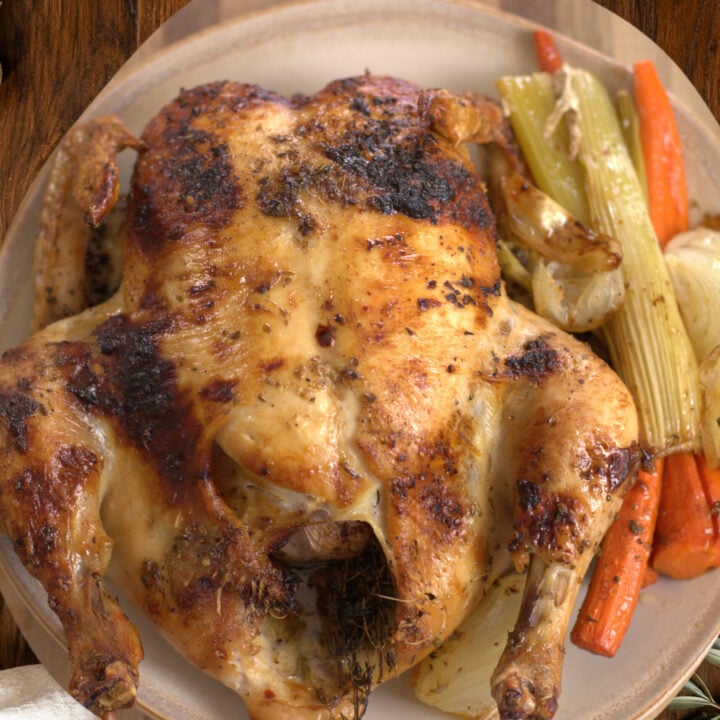
Thanksgiving Roast Chicken with Homemade Gravy and Lemony Potatoes
This Thanksgiving roast chicken has all the cozy flavors of the holiday without the work of roasting another turkey. The chicken is seasoned with rosemary, thyme, oregano, lemon, and orange, then roasted over aromatic vegetables until golden and juicy. The flavorful pan drippings become a silky homemade gravy, and brothy Greek lemon potatoes make it a complete holiday meal. I make this chicken throughout the year, but it is especially helpful on Thanksgiving when one turkey is not enough for a large gathering.
Ingredients
For the Thanksgiving Roast Chicken:
- 1 whole chicken, 4–5 pounds
- 2 carrots, cut into large pieces
- 1 large onion, cut into wedges
- 1 head garlic, halved crosswise
- 2 celery stalks, cut into large pieces
- 2 teaspoons salt, plus more to taste
- 1 teaspoon freshly ground black pepper
- 1 teaspoon dried oregano
- 1 sprig fresh rosemary
- 4–6 sprigs fresh thyme
- Juice of 1 lemon
- Juice of 1 orange
- 3 tablespoons unsalted butter, melted
For the Homemade Gravy:
- 3–4 tablespoons fat skimmed from the pan drippings
- 2 tablespoons all-purpose flour
- 1 cup strained pan juices
- Up to 1 cup chicken broth, as needed
- Fresh lemon juice, to taste
- Salt, to taste
- Freshly ground black pepper, to taste
For the Brothy Greek Lemony Potatoes:
- 9 medium russet potatoes, peeled and cut into thick wedges
- 1/2 cup olive oil
- 1/4–1/3 cup fresh lemon juice
- 1 1/2–2 teaspoons salt
- 1/2 teaspoon freshly ground black pepper
- 1 teaspoon granulated garlic or freshly grated garlic
- 2 teaspoons dried oregano
- Pinch of crushed red pepper flakes, optional
- 1/4 teaspoon ground cumin, optional
- 3 cups chicken broth
Instructions
Prepare the Oven and Roasting Pan: Preheat the oven to 425°F. Position an oven rack in the lower third of the oven.
Scatter the carrots, onion, celery, and half of the garlic head in the bottom of a roasting pan or oven-safe skillet. Place a roasting rack over the vegetables.
Prepare the Chicken: Remove the giblets from the chicken cavity, if included. Pat the chicken very dry inside and out with paper towels.
Season the inside of the cavity with some of the salt, pepper, and oregano. Stuff the cavity with the remaining half head of garlic, rosemary, thyme, and any remaining oregano. Squeeze the lemon and orange juice over the chicken and into the cavity. Place the squeezed citrus halves inside the cavity, if they fit comfortably.
Gently loosen the skin over the chicken breasts without tearing it. Spoon some of the melted butter underneath the skin and spread it over the breast meat. Brush the remaining butter all over the outside of the chicken. Season the chicken evenly with the remaining salt and black pepper.
Truss the Chicken: Place the chicken breast-side up on the roasting rack. Tie the legs together with kitchen twine and tuck the wing tips underneath the chicken so they do not burn.
Prepare the Lemony Potatoes: Place the potato wedges in a 9-by-13-inch baking dish. Add the olive oil, lemon juice, salt, black pepper, garlic, oregano, crushed red pepper flakes, and cumin. Toss until the potatoes are evenly coated. Pour in the chicken broth.
Roast the Chicken and Potatoes: Place the chicken and potatoes in the oven. Roast uncovered for approximately 1 hour and 30 minutes, or until the thickest part of the chicken thigh registers 165°F without touching the bone.
Baste the chicken with the pan juices once or twice during roasting. If the skin becomes too dark before the chicken is fully cooked, loosely tent the breast with foil.
Stir or gently turn the potatoes once during roasting. Continue cooking until they are fork-tender and surrounded by a luscious lemony broth.
Rest the Chicken: Transfer the roasted chicken to a serving platter. Loosely tent it with foil and allow it to rest for 15–20 minutes before carving. Do not discard the vegetables or pan drippings.
Prepare the Pan Drippings: Strain the liquid from the roasting pan into a heat-safe measuring cup or small pitcher. Allow it to sit for several minutes so the fat rises to the surface.
Skim 3–4 tablespoons of fat from the top and transfer it to a saucepan. Reserve 1 cup of the strained pan juices. Add enough chicken broth to the remaining pan juices to make additional gravy, if desired.
Make the Gravy: Place the saucepan over medium heat. Add the flour to the reserved fat and whisk continuously for 1–2 minutes, or until the mixture is smooth and lightly golden.
Slowly whisk in 1 cup of the reserved pan juices. Cook while whisking until the gravy is smooth and thickened. Add chicken broth, a little at a time, until the gravy reaches your desired consistency.
Taste and season with lemon juice, salt, and black pepper as needed. Keep warm over low heat until ready to serve.
Serve: Carve the chicken and arrange it on a platter. Serve with the warm homemade gravy and brothy Greek lemon potatoes.
Notes
Use a 4–5-pound chicken for the most reliable cooking time. A larger chicken will require additional time.
Patting the chicken completely dry helps the skin become golden and crisp.
An instant-read thermometer is the safest way to determine when the chicken is ready. Insert it into the thickest part of the thigh without touching the bone. The temperature should reach 165°F.
The chicken may be seasoned, covered, and refrigerated up to 24 hours ahead. Bring it out of the refrigerator 30–45 minutes before roasting.
The vegetables underneath the chicken flavor the pan drippings and protect them from burning. They can also be served alongside the chicken or blended into the gravy for a thicker, more rustic texture.
If the roasting pan becomes dry or the drippings begin to burn, add 1/2 cup chicken broth to the bottom of the pan.
The exact amount of broth required for the gravy will depend on how many pan juices the chicken releases. Add it gradually so the gravy does not become too thin.
If the gravy becomes too thick, whisk in additional chicken broth. If it is too thin, simmer it for several more minutes.
For a large Thanksgiving gathering, roast one turkey and prepare two or more of these chickens. The chickens are easier to manage than a second turkey, provide plenty of extra white and dark meat, and give you additional pan drippings for gravy.
The brothy lemon potatoes can roast alongside the chicken at the same temperature. If oven space is limited, prepare them earlier in the day and reheat them, covered, with a splash of chicken broth.
FILOXENIA HOSTING TIP
For a beautiful Thanksgiving platter, arrange the carved chicken with roasted carrots, onion, and fresh sprigs of rosemary and thyme. Serve the gravy in a warm pitcher and place the brothy lemon potatoes nearby. One turkey paired with two of these chickens creates an abundant holiday table without the stress of roasting multiple turkeys.
Recommended Products
As an Amazon Associate and member of other affiliate programs, I earn from qualifying purchases.
-
 ThermoPro TP19H Digital Meat Thermometer for Cooking with Ambidextrous Backlit, Waterproof Kitchen Food BBQ Grill Smoker Oil Fry Candy Instant Read
-
Quarter Cookie Sheet Baking Pan 2-Pack by Ultra Cuisine – Oven Safe Set is Rimmed Aluminum, Easy Clean, Commercial Quality for Roasting – Size 9 x 13 inches
-
Aluminum Pans Half Size, 9X13, Extra Heavy Duty Disposable Foil Pans For Baking (30 Pack) Roasting & Chafing, Deep Tin Foil Bakeware, Steam Table Tray, Cookware, Food Prepping, Cake & Oven Pan
-
Breville BOV900BSS Smart Oven Air Fryer Pro and Convection Oven, Brushed Stainless Steel
-
Lodge 3.6 Quart Enameled Cast Iron Covered Casserole with Lid – Dual Handles – Oven Safe up to 500° F or on Stovetop - Use to Marinate, Cook, Bake, Refrigerate and Serve – Lagoon




Leave a Reply